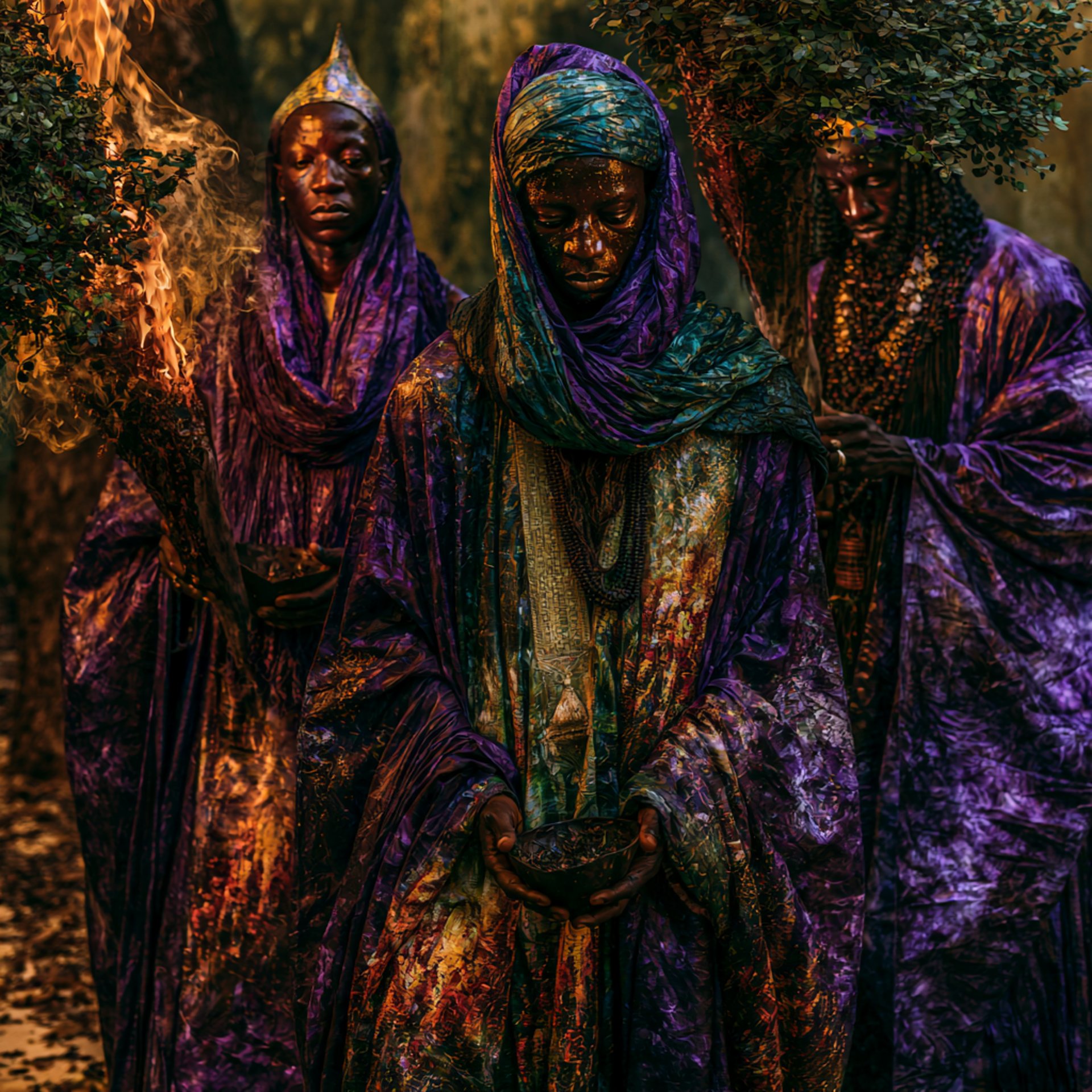
Serer Mythology

Unveiling Roog, the Pangool, and timeless nature rituals

Serer Mythology: The World of Roog and the Pangool

The Serer people of Senegal, The Gambia, and parts of Mauritania have preserved one of the most complex and enduring spiritual systems in all of West Africa. While many African cosmologies were forcibly suppressed or absorbed into newer religions, Serer religion — known as A ƭat Roog — continues to be practiced by segments of the population to this day. Rooted in ancestral reverence, ecological wisdom, and an intricate understanding of spiritual causality, Serer mythology offers one of the clearest views into an African worldview where divinity, land, memory, and law were once indivisible.

At the heart of Serer cosmology is Roog, the supreme deity. Unlike many anthropomorphized creator gods across world mythologies, Roog is formless, genderless, and fundamentally unknowable. Roog is not worshipped directly, but approached through a system of ancestral intermediaries known as the Pangool — spirits of revered ancestors who once lived, acted justly, and now guide the living from the unseen world. The Pangool are not gods in the traditional sense, but powerful ancestral presences tied to specific locations — rivers, baobabs, mounds, sacred wells, and family shrines. They are invoked for blessings, guidance, rain, protection, fertility, and justice.

This system — a theologically sophisticated blend of animism and ancestralism — reflects a worldview where the past is never fully past. Ancestral spirits remain active agents in the affairs of the living. Roog created the universe and then receded, allowing the moral and material balance of the world to be upheld by the careful maintenance of spiritual relationships between the living and the dead. This balance is maintained through ritual offerings, community ceremonies, and observance of sacred taboos.

A traditional Serer ritual site surrounded by baobab trees under a golden sunset.
Intricate Serer beadwork symbolizing connection to ancestors and nature.

Deep Roots

Among the most revered spiritual functionaries in Serer culture are the Saltigues — hereditary priest-diviners who serve as interpreters of the spirit world. Saltigues are often consulted before planting, warfare, migration, or major decision-making. Their training is extensive and based on initiation into the oral, symbolic, medicinal, and mystical sciences of the Serer. Saltigues interpret dreams, bird flight, natural omens, and the unseen movements of the Pangool. They often play key roles in rainmaking ceremonies and are regarded as custodians of ecological and spiritual harmony.

Serer religious life is not separate from political life. In precolonial times, Serer kings ruled with the advice and ritual blessing of the Saltigues. No coronation was valid without the participation of spiritual intermediaries. Sacred geography played a central role — specific forests, stones, and bodies of water were considered alive with spiritual presence. Certain trees were taboo to cut. Certain rivers could not be crossed without offering. These were not mere superstitions — they were part of a complex legal-spiritual framework that bound the community to the land and to their ancestors.

This system has survived centuries of Islamization, colonization, and modernity. While the majority of Serer people today identify as Muslim or Christian, many continue to observe traditional practices — especially in rural areas where the call to the Pangool and the rites of the Saltigue remain integral to agricultural, familial, and seasonal life.

For scholars, seekers, and students of African spiritual heritage, Serer mythology offers something rare: a continuity of ancestral systems still embedded in cultural practice. Its emphasis on intergenerational reciprocity, ecological balance, and the sacredness of memory offers vital lessons not only about African cosmology, but about the universal human relationship to land, spirit, and legacy.

At AfricanMythology.com, we honour Serer cosmology as one of the cornerstones of the West African mythological canon. As we prepare to release the book The Spirits of Senegambia, which includes new retellings of Serer myths and ancestral codes, this pillar page serves as a foundation — a space to explore the core principles, spiritual figures, and enduring legacies of the Serer world.

This is not folklore. It is a living system of knowledge.
It is not myth as escape — but myth as accountability.
And it begins, always, with Roog.

Common Questions

Who is Roog?

Roog is the supreme deity in Serer belief, creator of the universe.

What are the Pangool?

Pangool are ancestral spirits who act as intermediaries between humans and Roog.

How is Serer religion practiced?

It involves nature-based rituals, honoring ancestors, and maintaining sacred sites tied to Serer history.

Serer religion remains vibrant despite outside influences.

Where is Serer mythology found?
Why is it important?

It preserves cultural identity and connects people to their ancestors.

Serer Spirits

Visual stories of Roog and the Pangool.

An ancient Serer shrine nestled beneath a sprawling baobab tree at sunset.
Intricate carvings of the Pangool spirits on weathered wooden statues.
A vibrant Serer ritual dance performed in traditional attire under the open sky.
Close-up of sacred offerings laid out on a natural altar surrounded by forest.
A serene river in Senegal believed to be blessed by Roog, reflecting early morning light.
Elder Serer storyteller sharing myths with children around a fire at dusk.