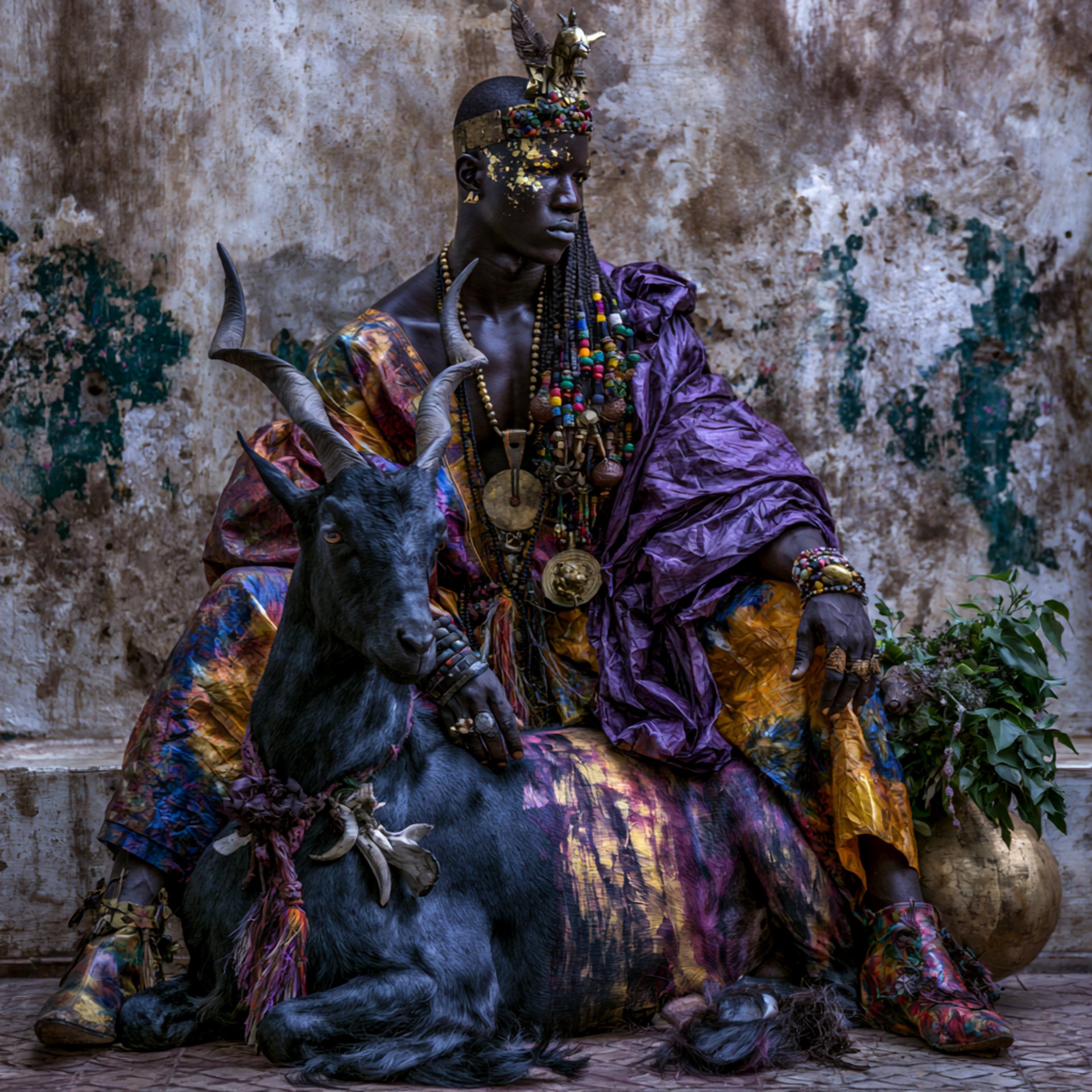
Senegalese Myths
Dive into Serer tales, pangool spirits, and sacred griot traditions.
Why Senegalese Mythology Still Matters
Senegalese mythology is one of the most spiritually intricate and historically rooted traditions in all of West Africa. Long before colonial borders, the arrival of Islam, or the influence of Christianity, the people of this region lived within deeply interconnected spiritual systems. These beliefs were not isolated to rituals or temples; they shaped the very structure of society — how land was honoured, how justice was interpreted, and how ancestors were remembered.
Even today, the mythological traditions of Senegal continue to live on, especially among the Serer, Wolof, Jola, and Mandinka communities. While religious identities may have shifted over time, the spiritual imagination of Senegal remains tethered to the sacred — to trees that remember, rivers that judge, and ancestors that guide the living.
The Peoples Who Shape the Myths
Much of Senegal’s mythological depth can be traced to its major ethnic groups, each of whom holds distinct yet sometimes overlapping spiritual frameworks.
The Serer people, particularly found in regions like Sine-Saloum, maintain one of the most well-preserved indigenous religious systems in Africa. Their cosmology is detailed and ancient, built around a genderless creator deity, Roog, and a structured network of ancestral spirits known as Pangool. Despite centuries of religious transformation across the region, many Serer families still practise traditional rites and pass down sacred knowledge orally.
The Wolof, Senegal’s largest ethnic group, are widely known for their embrace of Islam, yet they remain deeply rooted in oral storytelling traditions. Griots — the West African oral historians, musicians, and genealogists — play a particularly central role in Wolof communities. Many Wolof myths, legends, and folk systems survive through these performers, who act as both memory-keepers and cultural educators.
The Jola (also spelled Diola) of the Casamance region hold a cosmology strongly connected to land and water. Their spirituality revolves around ancestral presence, forest spirits, and ritual farming. Their ceremonies are often rooted in ecological harmony and community protection, and Jola mythologies tend to feature powerful nature spirits, sacred groves, and transformation motifs.
The Mandinka, closely related to the Mande world of Mali and Guinea, also inhabit parts of Senegal and The Gambia. Their mythologies share pan-Mande elements, especially the veneration of Faro, a water spirit associated with balance, birth, and spiritual justice. These spiritual ideas have long travelled alongside Mandinka music, language, and oral storytelling.
Much of Senegal’s mythological depth can be traced to its major ethnic groups, each of whom holds distinct yet sometimes overlapping spiritual frameworks.
The Serer people, particularly found in regions like Sine-Saloum, maintain one of the most well-preserved indigenous religious systems in Africa. Their cosmology is detailed and ancient, built around a genderless creator deity, Roog, and a structured network of ancestral spirits known as Pangool. Despite centuries of religious transformation across the region, many Serer families still practise traditional rites and pass down sacred knowledge orally.
The Wolof, Senegal’s largest ethnic group, are widely known for their embrace of Islam, yet they remain deeply rooted in oral storytelling traditions. Griots — the West African oral historians, musicians, and genealogists — play a particularly central role in Wolof communities. Many Wolof myths, legends, and folk systems survive through these performers, who act as both memory-keepers and cultural educators.
The Jola (also spelled Diola) of the Casamance region hold a cosmology strongly connected to land and water. Their spirituality revolves around ancestral presence, forest spirits, and ritual farming. Their ceremonies are often rooted in ecological harmony and community protection, and Jola mythologies tend to feature powerful nature spirits, sacred groves, and transformation motifs.
The Mandinka, closely related to the Mande world of Mali and Guinea, also inhabit parts of Senegal and The Gambia. Their mythologies share pan-Mande elements, especially the veneration of Faro, a water spirit associated with balance, birth, and spiritual justice. These spiritual ideas have long travelled alongside Mandinka music, language, and oral storytelling.
Sacred Landscapes and Spiritual Ecology
Senegalese mythology cannot be understood without understanding its sacred geography. This is a land where the natural world is sentient and spiritually charged.
Baobab trees are more than symbols; they are gateways to the ancestral world, often used as burial sites or meeting points for sacred dialogue. Rivers and wells, especially in Jola tradition, are homes to spirits who test human behaviour and bless or curse accordingly. Mountains, forests, and sacred stones function as spiritual centers — places where ancestors rest, and rituals must be performed to maintain ecological and moral balance.
In these traditions, the land remembers everything. Every taboo broken, every promise kept — all are witnessed by spirit. Ceremonies, offerings, and sacrifices are not superstition but part of a legal-spiritual system where nature enforces moral law.
The Power of Griots: Memory as Spiritual Authority
Across Senegal, one cannot speak of myth without speaking of the griots — known as gewel in Wolof. These are the memory-bearers of West Africa, tasked with preserving the histories, genealogies, and mythologies of their people through performance. They are musicians, poets, counselors, and judges, and their words often carry legal and spiritual weight.
In a society where literacy was oral and memory was public, griots held extraordinary authority. They could recite the lineage of a king for twenty generations or warn against a cursed union through a proverb disguised as a song. Even today, griots continue to perform at ceremonies, funerals, and state occasions. And in the world of mythology, they remain the keepers of the oldest stories — not just as tales, but as living contracts between the past and present.
Rituals, Taboos, and Ancestral Law
The spiritual systems of Senegal are governed by rituals and taboos designed to maintain harmony across generations. Naming ceremonies are considered vital, as names are believed to bind individuals to ancestral forces. To name a child without the proper ritual is to risk spiritual disorder. Sacrifices, whether of food, animals, or symbolic objects, are a means of honoring the spirits and restoring balance.
There are strict taboos around who may speak certain words, enter certain forests, or perform particular rites. Breaking these taboos can lead to illness, misfortune, or even the withdrawal of ancestral protection. Initiation ceremonies, particularly among the Jola and Mandinka, often involve teachings about cosmology, spirit conduct, and community obligations. These are not just rites of passage — they are spiritual contracts.
This is a justice system grounded not in punishment, but in restoration and reciprocity. To live well is to live in alignment with those who came before you.
Mythic Figures, Symbols, and Shared Themes
Across Senegalese traditions, certain spirit figures and motifs appear repeatedly. The Faro of the Mandinka is a powerful water deity associated with purification, spiritual justice, and rebirth. Among the Jola, Buku spirits — forest-dwelling beings — are feared and revered for their volatile nature and their ties to the mysteries of the bush.
One recurring symbol across Serer mythology is that of the snake beneath the baobab — a creature said to carry ancestral wisdom and divine warning. These stories are not metaphor. In these cosmologies, spirit beings are real forces that guide, test, or destroy.
Looking Ahead: Restoring and Reclaiming the Sacred
Senegalese mythology is not a relic of the past. It is a living system, fragmented by time and colonization but still remembered in rhythm, in ritual, in story. The gods and spirits of Senegal — from Roog to the river guardians — remain part of the invisible architecture of the region. To study them is not just to preserve culture, but to understand how myth once governed the moral, political, and ecological foundations of African life.
At AfricanMythology.com, we are committed to restoring the stories, systems, and cosmologies of the continent with accuracy, beauty, and respect. The Spirits of Senegambia — our forthcoming book — explores these traditions in full depth, with original retellings, maps of spiritual systems, and teachings drawn from oral traditions.
To follow the journey and receive myth-based insights, updates, and storytelling events, join our growing circle.
Myths
Visual stories from Senegal's sacred traditions
Related Mythological Figures and Themes
Faro — the Mandinka water spirit of order and rebirth
Buku spirits — forest entities in Jola traditions
Mythic river beings that guard against dishonesty and pride
The Snake Beneath the Baobab — a mythic motif repeated in Serer oral tradition
Further Exploration
This page is a living introduction to Senegalese mythology. For deeper storytelling, myth cycles, and spiritual systems, subscribe to our newsletter and be the first to know when the full book The Spirits of Senegambia is released — part of the groundbreaking African Mythological Codex series.
Related Pages You’ll Love:
Got questions?
What is Serer cosmology?
Serer cosmology is the traditional worldview explaining creation, ancestors, and nature in Senegalese culture.
Who are the Pangool?
Pangool are revered ancestral spirits who guide and protect communities in Serer belief systems.
What do Griots do?
Griots are storytellers, praise singers, and oral historians preserving Senegal’s mythology through generations.
Who are the Saltigues?
Saltigues are spiritual leaders and diviners who perform rituals and connect people to ancestors.
What role do rain spirits play?
Rain spirits ensure fertility and balance of nature, central to agricultural success in Serer culture.
How can I learn more about Senegalese mythology?
Dive into stories, interviews, and local traditions featured here to experience the rich heritage firsthand.