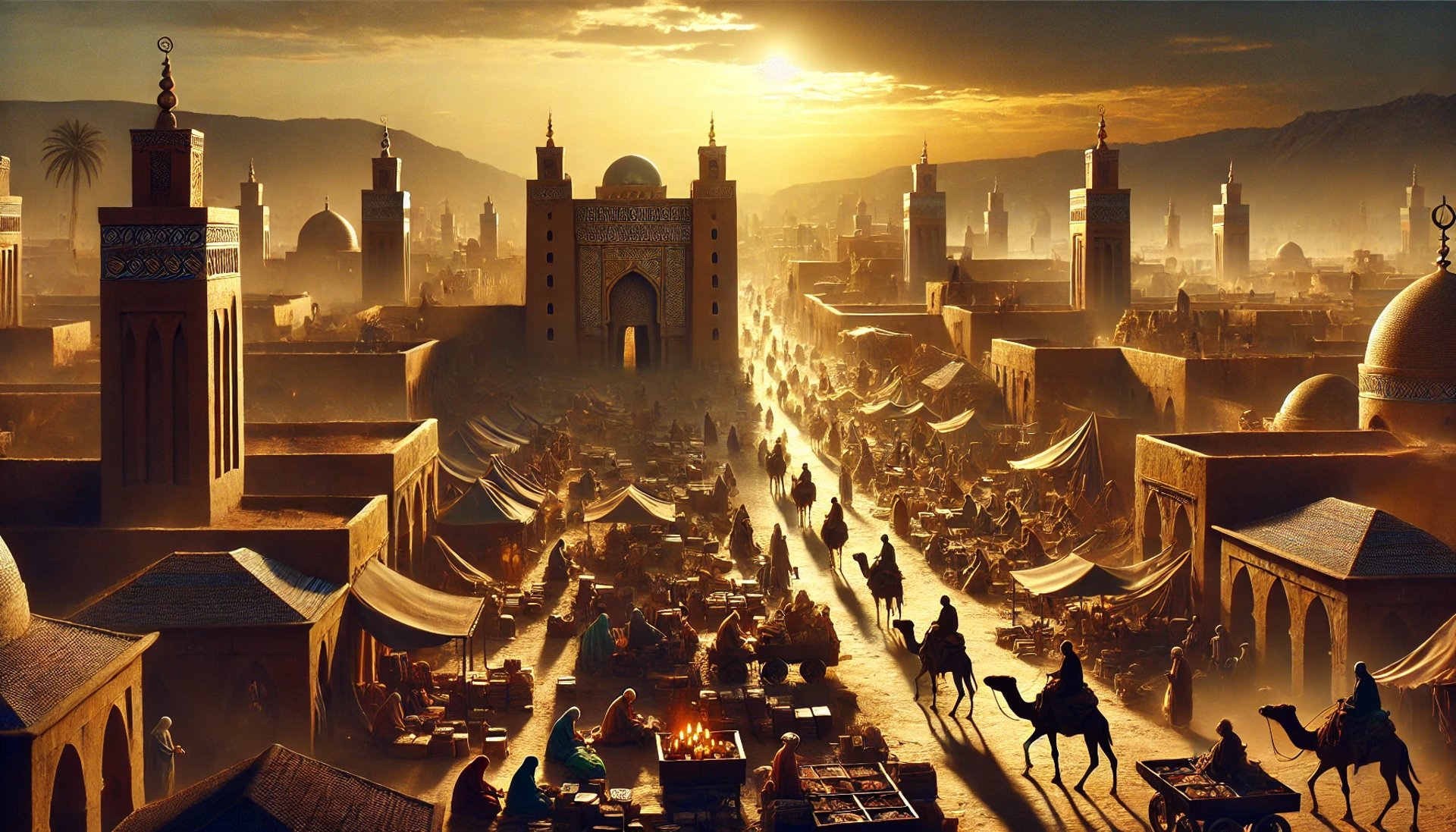
The Songs of The Songhai
Unveiling the myths and memories of the Songhai empire’s golden age
Songs of the Songhai: Myth and Memory Along the River of Kings
“The river remembers. The empire echoes. The myths still sing.”
At the height of the Sahel’s golden age, a kingdom rose from the waters. Its people spoke to spirits, its kings ruled with sorcery, and its stories, which were told in whispers and songs, shaped the soul of a continent.
Songs of the Songhai is a mytho-historical journey into one of Africa’s most powerful yet under-told civilizations. Told through the voice of griots and the lens of spirit, this work reawakens the living mythology of an empire built beside the Niger River—where gods, ancestors, animals, and rulers danced between worlds.
This is not just history. It is a song, that is like a river, and it still flows - it still echoes.
What Is This Book?
Songs of the Songhai is the first in a series of deeply researched, lyrically told explorations of African mythology before the colonial world redrew its borders.
It blends:
Pre-Islamic spiritual systems
Mythic storytelling
Sacred geography
Divine kingship
Oral traditions from Mali, Niger, Burkina Faso, and beyond
It brings to life the animist traditions, river deities, forest spirits, magical rulers, and ancestral mysteries that defined the worldview of the Songhai people and their neighbours.
What Will You Find Within?
Without revealing the full myth cycles, the book weaves:
The rise and reign of the sorcerer-king Sonni Ali
The mysteries of Harakoy Dikko, mother-spirit of the Niger
Echoes of Mali’s golden legacy—Sundiata, Sogolon, and the power of nyama
Tales of shape-shifting animals, crocodile warriors, and sacred rainmakers
The intersection of empire, ecology, and spirit
All told through a lens that is mythic, lyrical, and unapologetically African.
Why the Songhai?
The Songhai Empire was one of the most formidable forces in pre-colonial Africa, militarily, intellectually, and spiritually. Yet its mythology is rarely given centre stage. That will end with this book which will restore its voice, not through academic distance, but through living memory, sacred storytelling, and the spiritual texture of the lands it once ruled.
Let the river speak. Let the drums whisper.
Let the myths rise again.
AfricanMythology.com will explore the mythological regions of Africa and the epoch of the Songhai is one of the most instructive.
A Note from the Author
African mythology isn’t lost. It’s waiting. This book, like all the others in its tradition, like The Book of Bakongo and The Spirits of Senegambia will be a remembrance and a restoration of spirit to story.
Songs of the Songhai is the first verse in a larger chorus—part of a continent-spanning series that brings African mythology to the fore, on its own terms.
To be sent updates on the progress of the books
If you would like to explore more about African mythology, The Songs of the Songhai opens the door to West Africa’s spiritual empires: Mali, Niger, Burkina Faso, and beyond showcasing myths of water gods, ancestral kings, shape-shifting warriors, and the power of the spoken word.


A mesmerizing journey into African history.
The Niger is no ordinary river, and doesn’t simply water the land. It winds across West Africa in a great arc, from Guinea through Mali and Niger, touching the very soul of the Sahel. And at its most glorious bend, it birthed one of the greatest empires Africa has ever known.
The Songhai Empire did not rise from conquest alone, it rose from water, from word, from myth, and from memory. It is called the River of Kings because its people believed kings ruled by spirit, not just sword, and that their right to rule was blessed by the river, judged by ancestors, and whispered into power by griots.
Who Were the Songhai?
The Songhai were a powerful West African people whose empire flourished between the 13th and 16th centuries CE. Their homeland stretched across what is now Mali, Niger, and parts of Burkina Faso and Nigeria, rooted along the life-giving curve of the Niger River.
They inherited the wealth of Ghana and the prestige of Mali, but forged a different legacy — one built on military strength, sacred kingship, spiritual depth, and cultural brilliance.
Where Mali was remembered for its gold, Songhai was remembered for its sorcerer-kings, its warrior scholars, its river spirits, and its monumental cities: Gao, Timbuktu, and Djenne — cities that became temples of learning and power.
The Kings of Songhai: Power Made Myth
Sonni Ali (r. 1464–1492) – The Storm King
Sonni Ali was more than a king — to many, he was a magician, a shapeshifter, a man who rode storms and spoke with spirits. Feared for his military genius and unpredictable rule, he conquered Mali’s key cities, reshaped the empire, and became the mythical bridge between the old gods and the throne. He is remembered as a crocodile-king, a warrior who may never have truly died — only returned to the river that made him.
Askia Muhammad I (r. 1493–1528) – The Pilgrim Emperor
Where Sonni ruled with spirit and fire, Askia Muhammad ruled with law, reform, and faith. He institutionalised Islam in the empire, patronised scholarship, and built Songhai into the largest and most organised empire in West Africa’s history. But even Askia’s legend straddles fact and fable. Stories say his wisdom came from visions; that he sought guidance from stars and saints, and that even after death, his tomb whispered to those who listened.
The Later Emperors – Twilight and Fire
After Askia came kings whose names are remembered in varying tones: some noble, some tragic, some forgotten. Internal conflict, dynastic struggles, and foreign threats weakened the empire.
In 1591, the Moroccan invasion — armed with guns and greed — shattered Songhai’s might. But even as the empire fell, its myths rose.
The griots sang, the river remembered, and the Songhai soul endured.
A Legacy in Spirit
The Songhai Empire is more than a chapter in African history — it is a living spirit system, a tapestry of myth and memory, where the river is a god, kings are mediators between worlds, and the land itself is sacred.
Their mythology is filled with:
River deities like Harakoy Dikko, guardian of the Niger
Spirits of thunder, rain, and the underworld
Crocodile warriors, shapeshifters, rainmakers, and sky-speakers
And griots — those who kept the story alive when the empire fell silent
About the Book
Songs of the Songhai is the first in a continent-spanning series that restores African mythology to its rightful throne.
Told in story-form, it weaves the myth, memory, and majesty of the Songhai Empire into a lyrical and powerful whole.
Join the Journey
Explore the story of Songhai — and the wider mythologies of Africa — at AfricanMythology.com.
This is your inheritance. This is our memory. This is Africa, as she once told it.
FAQs
What are The Songs of Songhai?
It’s a book exploring Songhai myths and history through storytelling.
Who is the author?
Chinenye Egbuna Ikwuemesi is researching and writing this mytho-historical journey.
Why focus on Songhai myths?
These stories reveal the soul of a powerful empire often overlooked in African history.
When will it be published?
The book is currently in research and writing stages, with no set release date.
How can I learn more?
Stay tuned here for updates and insights into the Songhai empire’s stories.
Contact Us


Reach out to share your thoughts or learn more about the Songhai stories.